Emailidea

Home  >  Blogs
Key Performance Indicators for Email Marketing which Remain Important
Email Marketing

Key Performance Indicators for Email Marketing which Remain Important

The Most Important Metrics in Email Marketing Key performance indicators (KPIs) are very valuable in evaluating the success of strategies and their effectiveness in achieving what was intended. Within the realm of email marketing, KPIs serve as an unbiased measure that can determine whether or not this particular campaign is meeting its initial goals. However, numerals without any context are nearly meaningless. Contextualization is essential for email marketing KPI data to have any meaning. Two primary methods exist for achieving this – contrasting your latest campaign against other campaigns and measuring it against industry averages. As an example, if marketers wanted to analyse whether this year’s holiday promotion emails had a higher or lower open rate than those in previous years and what this could imply for the success of the current campaign, they would be enabled by comparing some specific KPIs from one campaign against the corresponding KPIs of other similar campaigns. The marketers quickly match their email marketing KPIs with the industry benchmarks and it’s not without good reason. For example, if you come across a situation where the bounce rate of your campaign is far above what is considered normal then it would be an indicator that maybe you should do away with the invalid email addresses or even change your current email service provider. While marketers are currently equipped with devices capable of assessing virtually everything, it might be quite appealing to evaluate everything. However, such information overflow can occasionally result in less clarity rather than more. For this reason, some email marketing KPIs are worth monitoring. Inbox Placement Rate (IPR) Open Rate Click-Through Rate (CTR) Conversion Rate Email Sharing/Forwarding Rate List Growth Rate Optimizing Marketing Email KPIs with Cross-Channel Marketing The use of a cross channel marketing platform such as Iterable can help you optimize your campaigns against the email marketing KPIs that really matter to you. You will be able to optimize for higher engagement by reaching out to customers personally and including the content they love on their favourite channels. For instance, automatically sending a subsequent email if any of your emails are deleted or going back again into someone’s inbox is possible through adopting other channel messages for following them up like SMS following e-mail messages. That way you might push them into reading the SMS sent to them, not forgetting also going back and checking an old email which was unread by them earlier. More opportunities for personalized messaging that drives customers to action are provided by cross-channel marketing. You can have increased email open rates, conversion rates, click through rates and other email marketing KPIs that matter to your brand by using personalized nurture campaigns to involve and re-involved your customers. Final Thoughts Understanding key email marketing benchmarks is crucial for measuring performance and making data-driven decisions. While industry standards provide a guide, the most important metric is your own consistent improvement. Track what matters with Emailidea’s real-time analytics dashboard.

Explanations, How the Deferred Email Works? And what is it?
SMTP

Explanations, How the Deferred Email Works? And what is it?

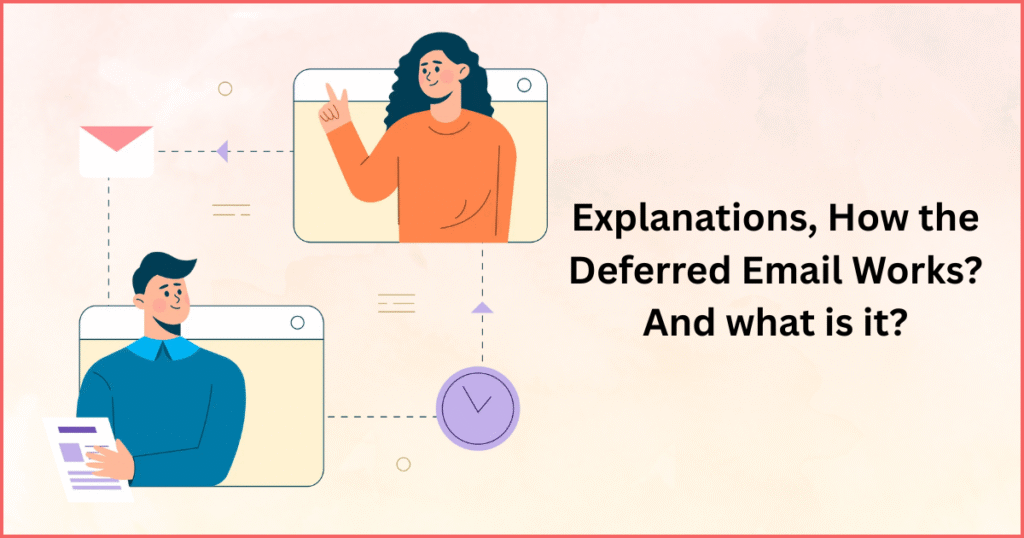
Deferred Email is a term used in reference to any email that has been temporarily put on hold by the recipient’s email server. Therefore, this is not something that the sender does purposely; instead the receiving server’s response happens due to various reasons. Basically, what happens when it comes to deferring an e-mail is like when you call somebody and hear busy signal on their line. This means that at that moment they can’t receive it. Such kind of deferral does not mean e-mail failure; Actually, it’s just using time as an excuse for time wasting. The sending server shall usually wait for some time before attempting once more the transmission of an e-mail message. Delayed Emails’ Causes Understanding email deferment is essential in e-mail marketing for the success of high delivery rates and good image among providers of e-mail services. How Delayed Emails Work As an email message is sent, it passes through several different places, including the sender’s computer and email server before landing in your inbox. This inter-personal relationship is governed by rules and instructions. Here are its stages: 1) Initiating mails: When you send a mail, it goes through your own mail provider ( the server responsible for sending out mails) first. After that this one communicates with the receiver’s own person’s mail provider to deliver your message. 2) Basic interaction: The sender’s operator logs onto the receiver’s operator whose conversation starts based on Simple Mail Transfer Protocol (SMTP), which is also considered a regular standard when transporting mail able items like emails. 3) Deferred Response: The mailing server of the recipient may be faced with temporary challenges to which it is forced to give a reply and this is what causes the deferral as opposed to just taking in the mail for delivery. This is normally an SMTP replay that carries a particular code for example, 4XX status code that symbolizes an interim mishap. 4) Reasons for Deferral: 5) Retransmit: 6) The Length of Retry Attempts: The amount of time during which an email sender’s machine will keep trying to send mails can differ. Generally, it covers approximately between 24 and 48 hours but can be much longer as per policies set by the servers involved. 7) Final Outcome: 8) Monitoring and Management: What is the purpose of Deferred Emails? When we first hear about deferment of emails it sounds rather annoying but there are actually many advantages and different situations where they could be used in email communications and marketing. This paper will outline these benefits with scenarios of their use: 1) Enhanced Email Deliverability When email servers delay messages in times of high volume or whenever problems arise, they remain more effective and stable which helps in ensuring that emails are received better by the general public. 2) Protection from Spam Spam is thwarted via deferral. Frequent postponements of an email sender indicate them changing their behaviour hence keeping email clean. 3) Server Load Management Email servers manage their load more efficiently through peak-time holding incoming emails as this prevents crashes and makes them run smooth. 4) Enhanced Sender Reputation Regularly monitoring and responding to deferred messages can help senders keep or actually improve their email reputation as it promotes good email sending habits. 5) Increased Email Engagement When emails are deferred, they are likely to be noticed and opened by recipients when sent at less busy time’s hence increasing engagement rate. Guide to Deferring E-mail Management It’s important to manage deferred emails properly so that your messages can reach their appropriate destinations and you can keep a good reputation as a sender. Try these approaches: Analysing and Modifying Deferred Emails First thing’s first: understanding why a message was deferred is crucial. This information is usually indicated in a reply sent through SMTP by the receiving server. Some common reasons include an overloaded server, spam suspicion or even technical hitches. Notify me should the following become unclear: If there is anything I need to clarify, please let me know. After determining the reason behind it, check the email itself for components that can activate junk mail filters such as some phrases or overuse of hyperlinks. In addition, ensure that your email looks formal and balanced and frequently remove out dated or incorrect email addresses from your database. You may also segment your list by aspects such as interest level or area, so as to lessen how much mail is sent out at once. Observation of Dispatching and accepting The employment of email analytics is crucial. These analytical tools provide insights on delivery, open rates, and click-through rates, revealing patterns for deferred mails. By creating alerts for deferral emails, an initiative may be taken instantly. Monitoring the performance of deferred emails relative to active ones is also important, as it may influence your overall strategy for email campaigns. Tackling Problems and Mistakes If you receive a notification about a deferral, look into it straight away. Determine whether the email server is properly configured, including authentication protocols such as SPF, DKIM, and DMARC. It is also useful to have feedback loops with major internet service providers (ISPs), which can alert you when recipients label your message as junk mail so that you can fix it quickly. If the same thing happens repeatedly, think of reaching out to your Email Service Provider (ESP) for help. Exact advice and help can be provided by themFurthermore, keeping up with the latest e-mail best practices is important as well. This means that you need to honour opt-outs requests without delay and ensure content relevance and engagement. When it comes to time-sensitive messages, having another e-mail provider or alternate means of communication can be a blessing. In this way, you can make it easier for your emails to get delivered successfully, build your sender’s credibility, and make sure that your communication gets to its intended audience. Deferred Emails Alternative Approaches In order to improve the send ability and manage timing of your email communications when handling deferred emails a

What is email reputation and how can we enhance it?
Email Deliverability

What is email reputation and how can we enhance it?

Every business sends emails to its customers. The most critical of these are transactional emails such as OTP, verification and password-reset emails. If they don’t reach their recipients, your email sender reputation could be to blame. This article explains what an email reputation is and ways of improving it. Why is an email sender reputation important? Email sender reputations play a vital role in the deliverability of emails. A bad email sender reputation can hinder the company’s abilities to send their marketing messages or communications. There are several ways to enhance your email sender reputation. For instance, always use double opt-in for subscriptions, provide clear opt out instructions, do not send emails too frequently, and more. One should consider using a monitoring service which will send alerts if there is problem with your account enabling prompt action before it gets too far. How a positive email sender reputation can change your life: Those who have ever sent transactional emails understand that there are several aspects which must be considered for good email delivery. Although transactional emails are legitimate by themselves however their consideration goes beyond just the legit concern of sending these types of messages. For example, one needs to think about the email sender reputation because this is a technical consideration. Why should you care about this reputation? The main reason behind this is preventing your messages from being seen as spam or junk so that they might be completely ignored or not landed into someone’s inbox at all. Transactional emails have significant information that customers are eagerly waiting, therefore if you do not deliver these emails instantly it can have a great effect on your brand and the user experience. Thus, it is essential to focus on those things which influence the email sender reputation score. By neglecting these aspects, you will not just heavily affect your ROI but also add to your stressors and work burden. Factors Affecting Email Conveyer Reputation At present, we’ve established the significance of determining factors that make email sender reputation important and make sure your mails reach the recipients’ inboxes. Thus we will review four crucial elements that might influence an IP rating. But don’t worry, as most of them are quite easily correctable. There are degrees of errors that may occur which can take long or shorter but can still be corrected; and this is what we will discuss next. How do I make my email sender reputation better? At this point you should expect us to guide you on improving your email sender reputation through domain authentication and creating a professional email address among others. You shall ensure that your customers receive their important transactional messages in time by observing the measures discussed below. 1.Authenticating Your Domain (SPF, DKIM, DMARC): The main reason your e-mails may not arrive in the inboxes of recipients is due to incorrect configuration of SPF, DKIM, and DMARC records. It should be fixed knowing only a little bit about the technology used. However, we will just discuss its fundamentals here. Notable records include SPF, DKIM and DMARC. These are methods used for email authentication which confirm to ISPs and mail providers that an e-mail sender is authorized to send an email from a particular domain. They work as a sort of validation on your e-mail sending server. What is the process for authenticating your domain? There are certain guidelines to adhering to when setting up SPF, DKIM and DMARC records, as shown below: 2. Do send emails to the relevant ones only. Email spamming is not allowed :  One thing that you need to remember is that you have to avoid sending out emails to anyone who does not exist and this is as a result of modern compliance regulations. What this means is that one must be a good digital citizen and make sure they are sending it to valid addresses only and that the sender has adhered to all the compliance guidelines. By employing double opt-in methods, you can verify your recipient’s address easily and without stress. It requires someone to agree twice before getting an email from you. An initial mail containing clicking buttons may be sent to them while they are still inquisitive about their validity on your site, before redirecting them using a link given in a body message itself for submission or checking box confirmation about receiving future messages from sender. If you’re also counter parting in case marketing emails must be sent separate from transaction-based ones then these tips might help: Keeping Your Email List Clean A clean mailing list that is compliant with all regulations must be maintained all the time. For this purpose, you should abide by the guidelines below: 3. Refrain from using subject lines that look like spam The subject line also influences the first impression of a user. It is pointless to enhance the technical aspects of email sender reputation if the contents in your emails do not urge them to open them. To prevent this, it is important to know how to write an effective email as well as when to send one. For legitimate transactional emails, it is best to get straight to the point. At the same time, spam filters are also watching for the titles that sound like spam ones. Do not use all caps or catchphrases such as “Guess what we have in store for you!” Though you can always have some fun with subject lines, keep them brief and on-topic. Final Words A strong sender reputation is the foundation of successful email marketing. By focusing on authentication, list hygiene, and valuable content, you ensure your messages are trusted and delivered. Build and protect your reputation with Emailidea’s expert tools.

The Ideal Email Marketing Strategy for Publishers
Email Marketing

The Ideal Email Marketing Strategy for Publishers

How can you get your voice heard in a world where content rules supreme and everybody is a publisher? The twofold challenge you face as a publisher includes producing quality content as one part of it; that’s just one portion of the equation that’s necessary for effective communication. In this blog, we seek to provide practical and no-nonsense email strategies specifically designed for creators who have too many competitors fighting for their attention. We will outline ways to create an involved following, and attain renown status in the oversaturated domain of information dissemination. Strategies to Improve Email Marketing for Modern Publishers 1) Building your mailing list Why Should Publishers Grow Their Mailing Lists? A Publisher’s Email List Growth: Some Practical Strategies 2) Personalized email content meets the needs of various audiences Anything that bounces off the subject lines of an email is more likely to get opened. However, personalization does not end with the subject line only. Increased readers’ engagement with emails and the published contents is fostered by personalized content. Consequently, making them marketers lovely. Preferences, life histories or current affairs written by the authors are easy to find in any form. This makes them feel very significant and prompts a deeper emotional response from them. Readers go through lots of information every day before deciding what to read. They may thus face anxiety in their decision making process concerning which texts among many available ones they should pick for reading purposes. It is like choosing between brownish chocolate biscuits and red hot chilli peppers; there is too much sweet cookies; so they cannot run away from these things without selecting anything at all – unless they find something around pepper flavoured bites at will! Personalizing your messages lets you have them wear comfortable shoes whenever you ask them what might interest them most today or tomorrow. That is because everyone has own interests and beliefs that take him or her closer than anything else could ever do! As a publisher, how to implement personalized content curation 3) Make use of pre-installed emailing operations Computerized postal campaign is a pre-determined arrangement of electronic mails that result from certain actions or conditions leading to its automatic dispatch to the subscribers. This automation leads to timely, relevant, and personalized communication with minimal manual input. They slash time and resources allowing you an organization run campaigns without having to write every single e-mail sent out. Some thoughts on how to create automated email campaigns 4) Use interactive content in emails Interactive content is that kind of content that demands and incites active involvement from its audience, as opposed to mere consumption without considering participation. It engages users in meaningful interactions with it. This can include simple actions like clicking or swiping to more complicated processes such as answering questions or making choices. Interactive Content Examples: By integrating interactive content into email campaigns, publishers can create a more engaging and memorable experience for their subscribers. This approach not only entertains and involves the reader but also strengthens their connection with your brand and content. 5) Offer valuable & varied content This way, they not only keep their existing subscribers but also attract new ones by creating a colourful comprehensive email experience through value and variety. The strategy entails knowing and catering for the manifold interests of your audience through a range of content that is educational, entertaining as well as uplifting. By providing a variety of content that serves different areas of interest or need among the target audience, you will enhance customer satisfaction as well as retention. Regular supplies of high-quality, diverse materials, cement your position as respected and reliable company within specific fields. Some ideas for including variety in your content: To Sum Up For publishers, an email list is a direct line to your audience, free from the noise of algorithms. By focusing on list growth, personalization, and valuable content, you can build a loyal and engaged following. Manage and segment your growing audience with ease using Emailidea.

What are the repercussions of being on an IP blacklist?
Email Deliverability

What are the repercussions of being on an IP blacklist?

A solution for the blacklisted IP There comes a time when for an unexplained cause the traffic to their pages or the deliverability of emails starts falling but cannot be associated to anything with online business owners and email marketers. This could be as a result of several things including search engine indexing problems among others. But sometimes marketers may wonder, is my IP blacklisted? One way in which cybercriminals are stopped from abusing client-private systems via bogus or unsolicited messages is through IP blacklisting. Systems are created by organizations to watch out for communication between company secured networks and all other outside IP addresses. Gmail and Microsoft are examples of email service providers who may have access to these blacklists, enabling them to mark emails associated with these IPs as junk or spam automatically in their subscribers’ inboxes. In general, owners of blacklisted IPs observe a considerable decrease in email penetration rates, which has an adverse impact on the reputation of the source and efforts to market it. Despite the fact that IP blacklisting is largely advantageous for security purposes in online businesses, customers and vulnerable data; there are occasions when an IP address happens to be misplaced in terms of being tagged as malicious. To assist marketers comprehend this intricate matter better, here is a comprehensive manual that shows how to recognize, manage and avert unintentional blacklisting your IP address. Steps You Must Take to Prevent IP Blacklisting When one is an IP address holder, they are able to use different ways to know if their IP has been blacklisted by some organizations. While a lot of people think all email service providers get their IP blacklist information from one centre or centre agent, there are many different kinds of IP blacklists used today. Some lists hurt holders of these special codes more than others. The most reputable IP black lists damaging email delivery include: Email marketers may ask themselves, “Is my IP blacklisted?” The easiest way to do this is by finding the IP address of your email server and inputting that one or more of the aforementioned IP blacklist sites. From the search results, you will determine if these services have flagged your IP as suspicious or not. Your IP has been blacklisted by a reliable source; possible ramifications include: Getting Emails Not Delivered No matter how pressing your email message may seem at the time, don’t waste your breath; if it came from an IP that was once blacklisted by some bloody provider, it will not find its way in someone’s inbox, but rather in the trash bin. When an IP address holder sends an email through a blacklisted server, he/she would receive immediately after tellingly referred to messages called bounce messages after which such a person decides to compare the names with those on Google blacklists service list and URL Links. High of emails flagged as spam servers Most likely, any messages from such an address would land directly on the junk folder because major email providers like Google and Microsoft see blacklisted IPs as potential sources of spam. So if you have clients who happen not to receive your emails from them there is no way beyond saying anything about it furthermore there is no other specific message except for those saying this mail has been filtered out due daringly visible mails through people’s insights. Significant reputational damage Companies associated with blacklisted IPs can suffer significant reputational damage, as all emails sent from official accounts will be at risk of being marked as suspicious. If customers associate your brand with spam, your company’s credibility and reputation will be adversely affected, with 70% of email users believing spam negatively impacts their online experience. Wider business communication issues Emails sent from blacklisted IP addresses are not only less likely to reach potential clients, but may also be sent to junk mail inboxes associated with existing customers and internal employees. At present, it’s believed around 61% of internet users deploy some form of spam filter intended to automatically block suspicious emails, potentially hindering wider business communications for any entities that find their IP address wrongfully linked to an IP blacklist. Reputational Loss Reputation has a high price tag for companies linked to blacklisted IPs; emails sent and received from official accounts are always being eyed with suspicion. Your business will be tarnished if customers relate it to spam because human ignorance, says that unsolicited messages make 70 % of email users feel like they are being cheated online. Broader Business Communication Problems It is hard for emails coming out of blacklisted IP addresses to reach potential customers; sometimes they do not even get beyond existing clients’ junk mailbox and internal workers’ spam folders. At the moment, around 61% of internet users are thought to use some sort of anti-spam filter which is intended to automatically reject spam-like messages otherwise known as junk or unwanted e-mails thereby limiting any chance to broaden business interactions if an entity inadvertently finds itself listed together with other entities categorized as such by themselves due to error in listing their own site’s unique identifiers. It has been noted that, although various IP blacklisting services have their own criteria for identifying suspicious accounts (most are not revealed), some of the reasons are widely accepted by digital communication specialists. For marketers who often wonder whether their IP’s are blacklisted or not, it is advisable to establish if any of these instances apply to one’s internet protocol address. Promotion through excessive email Email marketers who continually send large quantities of identical messages to many different non-related accounts could be perceived as fraudsters and hence be flagged by internet service providers. The chances of your IP address being blacklisted will increase if spammers pay attention, such behaviour or if many recipients report you to their own email servers as a junk mail sender. Instances used as examples on how spam-like looks like according to IP blacklisting services include: Emails directed to non-existent accounts Organizations

IP Warmup – What is the Importance?
SMTP

IP Warmup – What is the Importance?

Understanding the Importance of IP Warmup in Email Marketing In email marketing, there’s something that we tend to ignore too often. Can you take a guess? If you said IP warm-up, then you are right! You may have guessed it from the title of this post or encountered it in an internet search. The truth is you might not be aware of what exactly IP warm-up means. Therefore, let’s break it down for you. We’ll answer: So, What Is IP Warmup Anyway? We are joking; however, we must break it down and make it totally understandable because many people overlook this step in email marketing. To begin with, IP stands for Internet protocol in this context. Therefore, an IP address can be defined as a unique numeric identifier that is assigned to a device which connects to either a network or the internet. IP warming involves sending out small amounts of email from a new IP address over time so as to gradually increase its reputation and ensures that it does not get blocked or flagged as spam. Email service providers do not know anything about the reputation of a new IP address when you send out emails from it for the first time. Consequently, if you were to send massive amounts of emails without any data about that unknown IP, many would probably be blocked or filtered into the spam folder. Gradually increasing the volume of e-mails permits you to build up the reputation of the IP (Internet Protocol) in a safe manner towards its future. Upon building this good sending history, more mails will go into inboxes and the performance ability will improve. This Is Not What IP Warmup Is: Basically, IP warmup is a gradual process that serves to establish trust and a reputation for long-term deliverability. It is an essential process for any fresh email IP address. Why Is The Importance Of Critical IP Warmup? Correct IP warm-up is important because inbox providers are careful about unidentified sending IPs that lacks any behavioural data. Sending large volumes too quickly looks dubious and might lead to temporary or permanent blocking. Gradual warming of new IPs shows responsible sending patterns which generate positive engagement signals thereby helping in building up sender reputation. This way, issues regarding the deliverability can be minimized significantly. Additionally, focusing on IP warmup helps in protecting senders’ credibility while ensuring reliable inbox delivery. Utilizing the advantages of IP Warmup There are numerous advantages for taking time through the IP warmup process. Below are some of the things you will appreciate when you follow the right path: Good IP warming translates into enhanced deliverability, increased open and click rates, as well as increased trust by subscribers. Most Effective Techniques for IP Address Warm-up What does it mean to warm up an IP address? Do I need to do some stretches? Drink gallons of water? No! But there are important things you should know about the process if successful IP warmup is your goal. Take it slow Start with very low sending volumes like 1-200 emails a day, even if you have a huge mailing list. You don’t what to make the servers crash and be taken to a con artist or someone who does nothing but sell! Then, following weeks and/or months, keep on raising the sending rates as engagement figures are still looking good. Watch out for complaint rates Complain rates as well as spam folder placements should be observed closely. And when people press ‘spam’ on your email, just guess; it’s not good! Henceforth utilize double opt-in and confirmation messages for creating legitimate lists. Never purchase your lists! Segmentation for the win Divide your list into smaller campaigns instead of one big bulge in order to send targeted relevant content to each user thereby enhancing their experience on the site too. Never duplicate same material over and over! Diverse your message in order to prevent it going unnoticed by spam automation detectors. Use a variety of emails such as promotional, newsletters or onboarding sequences. If complaints or reports of unsolicited messages rise, one may also want to pause or control send-outs temporarily. As you go forward revise your activities as per ongoing observation and assessment. IP warmup protocols reflect responsible dispatching which results in sustained delivery for an indefinitely long period of time. What are the best times to heat up a fresh IP? There are some instances in which it is necessary to start a fresh IP address by warming it up: Obtaining a new dedicated IP Purchasing a new dedicated IP address to send email campaigns means that it has no reputation, hence the need for proper warming up. Changing email service providers Thus, when you change ESPs and begin emailing from their IP addresses, inbox providers do not recognize them as you should know by sending; therefore, this requires a warming up period. Including more IPs If your email volume has risen, and you have gotten extra IPs to send from, first warm up the new IPs before using them to their full capacity. Reactivating a Dormant IP If you have not sent any emails from an IP for a long time, its reputation may be worse or forgotten. Warm it up again before full use. Launching a New Brand/Domain When launching a new brand, domain or campaign type, the initiation of this new identity’s IP reputation should start from scratch. In other words, starting sending out messages using “new” IP address that inbox providers still do not possess enough behavioural data on. Following best practices for IP warmup helps establish positive metrics and sender reputation for unknown IPs. This reduces chances of spam filters blocking your emails. Frequent IP Warmup Issues But we do understand that you want sending emails for masses, however few challenges surround it. For instance, if you are in a hurry then it can block you easily! Some other challenges are: Now for the positive side. A sender can sidestep these blunders and effectively

Understanding Email Workflows
Email Automation

Understanding Email Workflows in General and How they Operate?

Every day, email marketers are inundated by a flood of emails. Your audience members get plenty of these messages – from newsletters and ads to transactional updates, among others. Just keeping up with emailing can make it feel as if their jobs are solely to reply to emails! What if, however, there was a way for you to cut through the din in e-mail strategies? The answer: automated sequences that make communication easier; engage users (customers) more without having them been there before this moment at least once. Transformed but more structured inboxes keep subscribers entertained instead of putting them off would be possible via such means as email workflows. In this post we will discuss what makes planning good workflows because they may really help in increasing productivity while also enabling individualized experiences. You will become an expert in automation! The right email workflows let you reach customers tactically thus making your messages stand out among the rest. Get ready to help tame your customer’s inboxes! Email Workflows—What Are They? Let us first start with the fundamentals. A sequence of predetermined messages initiated by particular behaviours is referred to as email workflows. Take for instance leaving something behind in an e-commerce cart; a follow up automated email could entice you into making your purchase by offering a discount on the price. Workflows primarily consist of three important components: Triggers These may include actions that initiate a sequence such as when someone signs up as a new subscriber, fails to make payment or creates a support ticket. Actions These may include actions that initiate a sequence such as when someone signs up as a new subscriber, fails to make payment or creates a support ticket. Automation Email facilities apply regulations and sequences established by users for inciting activity and transmitting work emails without the need for human intervention. What is more, these components work together in such a way that communication is improved by sending information that is punctual and appropriate through workflows. In terms of maintaining connections, attracting targeted groups, as well as promoting sales; they do it without fail. The Benefits of Allowing Workflows to Perform the Task There are numerous reasons why you should consider implementing effective email workflows. Let us look at some of them. Increase Effectiveness To begin with, the use of automated systems for repetitive tasks can increase effectiveness. For what purpose would you have someone send follow-up emails repeatedly, when you can develop a sequence that can be used again and again without much effort? The regular, but vital tasks are carried out by workflows in an automatic mode. Greater Level of Personalization There is some kind of an enchantment in highly personalized communication. By segmenting and creating custom fields, you can shape messages in such a way as to show that you understand what each subscriber needs and consequently create one-on-one experiences. Uniform Conversation In addition, it is a tangible plus when it comes to being consistent. Your brand voice is conveyed by workflows that always send messages at the correct time. There are no longer worries about lost opportunities or messages that have not gone through. Reliable executions are ensured through automatization. In short, productive email workflows, improve productivity, create relationships via relevant communications, and ensure smooth operations of communication.  Custom Email Workflows Prepared to create enticing workflows? We’ve provided suggestions to help you design and execute successful automated email chains. The first step is to have the proper email marketing software. Pick a platform with strong workflow constructors, segmentation features, and automation tools such as Emailidea. For convenience, many of them have Drag-and-drop workflow designers for easy visual creation. Then create templates for frequent occurrences such as welcome series, abandoned carts, re-engagement of subscribers among others. You may also need to consider mapping out such aspects for now: To keep your prospects from forgetting about you when it comes time to offer them unique deals, have these messages handy. Switch it up! Use subscriber information to create groups of people. If you add things like first names into your writing, that’s just one thing, but you are not really saying anything to people. So you end up losing out on some great chances to connect with them deeply. Different follow-ups can be sent based on behaviour by setting conditional logic in addition. The opportunities are limitless! In conclusion, don’t forget about testing and modifying the processes over time. A/B testing helps in trying out what triggers, sequences and contents could work best for you all the while improving optimization. Building perfect workflows becomes an easy task when it comes to effective automation in its unleashing! Some Email Workflow Ideas for Your Inspiration Crafting email workflows from nothing might appear hard. This is the reason why successful examples can guide you! We will discover effective work flows so that we can come up with our own ideas. An Onboarding Series Welcome series plays an important role in helping new subscribers come on board. Send an instant welcoming message followed by useful tips and promotions that encourage engagement. These messages should be made personal in order to create a bond. On boarding workflows are also great for turning on newly created accounts as well. Send out a set of useful suggestions and pieces of training that will provide a smooth transition for users while activating self-service. Abandoned Cart You can establish abandoned product flows for e-commerce firms. If a customer fails to finish their order, remind them of what they left behind and offer a discount code if necessary. This prevents the loss of sales that are otherwise unreachable. Win Them Back Series To regain engagement from non-active subscribers, use win-back flows which provide customized content. Carry out chatbots, promotions, and myriads of feedbacks after their experience. Loyalty restoration is indeed fruitful. A minute portion represents the many varieties of email flows that are possible in your organization! But at least you have acquired some ideas on how to expand them.

Trends of Email Marketing
Email Marketing

Trends of Email Marketing In 2025: Influence on the Inbox In the Future

Through targeted and personalized emails, email marketing seeks to promote products, services, and events; build or maintain customer relations. This is one of the most versatile and effective forms of marketing that a firm can use in its drive for sales; it helps enterprises from all over the world connect with their customers. Its importance lies in the fact that it can send the right messages to people at the right time, thus making it important for marketing activities today. Trends in Email Marketing Large Scale Personalization Marketers of email are exploiting data and mechanization to customize message contents and subjects addressing individual recipients. By far, personalisation makes use of more than the recipient’s name alone; this entails adjusting the whole mail to fit into any past behaviour, preferences, or even age. Communal Emails Marketers are putting their heads together to come up with interactive items in emails, for instance polls, surveys, quizzes and hotspots clickable. All these elements can enhance recipient interaction with the messages and also help marketers to provision personal taste information. Mobile Optimization It is exceedingly important to optimise mobile devices because a notable percentage of emails are opened on such devices. Responsive emails which appear well on small screens and whose functions are good have thus been designed by marketers. Privacy and Data Protection As data privacy concerns increase, email marketers are putting more emphasis on data protection and following laws such as GPDR and CCPA regulations. As a result, nowadays there is a more permission-based marketing plus transparent ways of handling user information. Email Accessibility The need for ensuring email access for disabled persons has been increasing over recent times. This may include ensuring that designs are accessible and providing alternative text descriptions to images. Divisions and Behaviour Motivators With the use of advanced divisions and behaviour motivators, messages can be highly relevant to a specific group of subscribers. For instance, when users act on the website, they are sent a series of emails that act as a warning. Content Generated by Users (UGC) Content generated by customers like reviews, testimonials or posts on social media is encouraged by marketers for building trust and credibility through email campaigns. Email with Video Some email clients are beginning to support videos incorporated into emails thereby allowing marketers to create more captivating email content. Sustainability and Green Practices Businesses are practicing e-mailing in a way that conserves the environment, for instance by reducing the size and optimizing images in their marketing emails so as to have lesser carbon emissions. Predictive Analytics Predictive analytics have gained popularity for the anticipation of consumer behaviour and preferences. This enables sending out materials that will attract more interest from customers. AI-Generated Content Automated content generation tools powered by artificial intelligence can be used in populating emails with relevant text, such as product recommendations or personalized email subjects. FAQs Is there a future for email marketing? Indeed, it has a future because it keeps changing with technological processes as well as consumer demands. How does interactive content benefit email marketing? Interactive content helps boost engagement via emails since it encourages an interactive relationship between recipients’ devices and companies themselves that enhance individualization based on analytics that facilitate a personalized customer experience, thereby ensuring improvement in campaign performance through their optimization. Email marketing uses AI in what ways? AI is used in email marketing for various purposes, including personalized content recommendations, optimizing the timing of email delivery, predictive analytics, and automated content generation. Final Thoughts The future of email marketing is smarter, more personal, and more automated. By embracing trends like hyper-personalization and AI, you can stay ahead of the curve and deliver exceptional experiences. Future-proof your marketing strategy with Emailidea’s advanced features.

Email Marketing Mistakes to avoid
Email Marketing

15 Email Marketing Mistakes and How to Avoid Them

Email marketing can be a robust tool for connecting with your audience and boosting conversions, but common errors can derail your efforts. Here’s an in-depth guide to 15 email marketing mistakes and strategies to avoid them. Top 15 Email Marketing Mistakes 1. Neglecting the Subject Line The subject line is the gateway to your email’s success. If it fails to catch attention, your email might go unopened. Craft subject lines that are engaging and to the point. Experiment with A/B testing different styles—be it urgent, curious, or informative—to determine what your audience responds to best.Actionable Tip: Use attention-grabbing elements such as numbers, questions, or personalized touches (e.g., “Hey [Name], check out your exclusive offer!”) to boost open rates. 2. Overloading Your Subscribers Sending excessive emails can cause fatigue, leading to unsubscribes. Find a balance by analysing how often your audience wants to hear from you. Too few emails can miss engagement opportunities, while too many can be overwhelming.Actionable Tip: Monitor your engagement metrics and adjust your email frequency accordingly. Tailor content to different segments to maintain relevance and interest. 3. Ignoring Audience Segmentation Treating all subscribers the same is inefficient. Segmentation helps you target specific groups with relevant content based on their behaviour and interests, enhancing engagement and conversion rates.Actionable Tip: Segment your audience by criteria like purchase history or location. Customize your messages to address the unique needs of each group. 4. Overlooking Mobile Optimization With a significant portion of emails read on mobile devices, non-responsive designs can lead to poor user experiences and high bounce rates. Ensure your emails look good on all screen sizes with a mobile-friendly layout.Actionable Tip: Test your emails on various devices and platforms to ensure they display correctly. Use responsive design principles to adapt to different screen sizes. 5. Lack of Personalization Generic emails can feel impersonal and lead to disengagement. Beyond using the recipient’s name, leverage data to create content that resonates with individual preferences and behaviours.Actionable Tip: Utilize dynamic content to present tailored offers or recommendations based on the recipient’s past interactions or preferences. 6. Making Content Too Complex Overly complicated or lengthy emails can overwhelm readers. Aim for simplicity by focusing on a single clear message or call to action. Utilize bullet points and visuals to make your content more digestible.Actionable Tip: Craft straightforward and engaging content. Use clear headings and concise paragraphs to make your email easy to read. 7. Disregarding Analytics Analytics provide critical insights into your email performance. Ignoring these metrics is akin to navigating without a map. Regularly review your KPIs such as open rates and click-through rates to refine your strategies.Actionable Tip: Set up regular performance reports to track and analyse email metrics. Use these insights to make informed adjustments to your campaigns. 8. Lacking a Clear Call to Action Every email should guide readers toward a specific action. A vague or missing call to action can diminish the effectiveness of your email. Ensure your CTA is prominent and clearly directs recipients on what to do next.Actionable Tip: Employ action-oriented language and make your CTA stand out visually. Experiment with different CTAs to determine which yields better results. 9. Skipping A/B Testing A/B testing helps you compare different email elements to see what performs best. Neglecting this practice is like guessing the best approach. Test various aspects like subject lines and content formats to optimize performance.Actionable Tip: Regularly perform A/B tests on key elements of your emails and analyse the results to identify what works best for your audience. 10. Using a No-Reply Email Address No-reply addresses can feel detached and discourage engagement. Use a responsive and friendly email address that invites replies and fosters a sense of community.Actionable Tip: Set up a dedicated email address for queries and feedback. This demonstrates that you value subscriber interaction and are open to communication. 11. Poor Timing of Emails The timing of your emails can significantly impact their success. Sending them when your audience is least likely to engage can reduce effectiveness. Experiment with different send times to find what works best for your audience.Actionable Tip: Use historical data to determine the best times to send emails. Take into account time zones and industry trends when scheduling. 12. Neglecting List Hygiene An outdated or unclean email list can lead to high bounce rates and affect deliverability. Regularly clean your list by removing inactive subscribers and correcting invalid addresses.Actionable Tip: Implement a routine for list cleaning to maintain a healthy list. Use verification tools to ensure email addresses are valid before sending. 13. Ignoring Legal Compliance Failing to adhere to email marketing regulations like GDPR and CAN-SPAM can result in penalties and damage to your reputation. Ensure compliance by including necessary opt-out options and honouring unsubscribe requests.Actionable Tip: Stay updated on email marketing laws and incorporate compliance practices into your strategy. Regularly review and update your policies as needed. 14. Being Excessively Promotional While driving sales is important, overly promotional content can alienate subscribers. Focus on providing value and building relationships rather than constantly pushing for sales.Actionable Tip: Balance promotional emails with valuable content that educates or entertains. Provide special offers or insights that enrich the subscriber’s experience. 15. Inconsistent Brand Voice Inconsistency in your brand voice can confuse your audience and weaken your message. Develop a coherent brand voice that reflects your company’s identity and ensures consistency across all communications.Actionable Tip: Define and document your brand voice. Ensure it is consistently applied in all email communications and train your team to maintain it. Wrapping Up Avoiding common email marketing mistakes is the fastest way to improve your results. By focusing on fundamentals like list hygiene, mobile optimization, and clear CTAs, you create a foundation for success. Let Emailidea’s platform help you implement these best practices automatically.