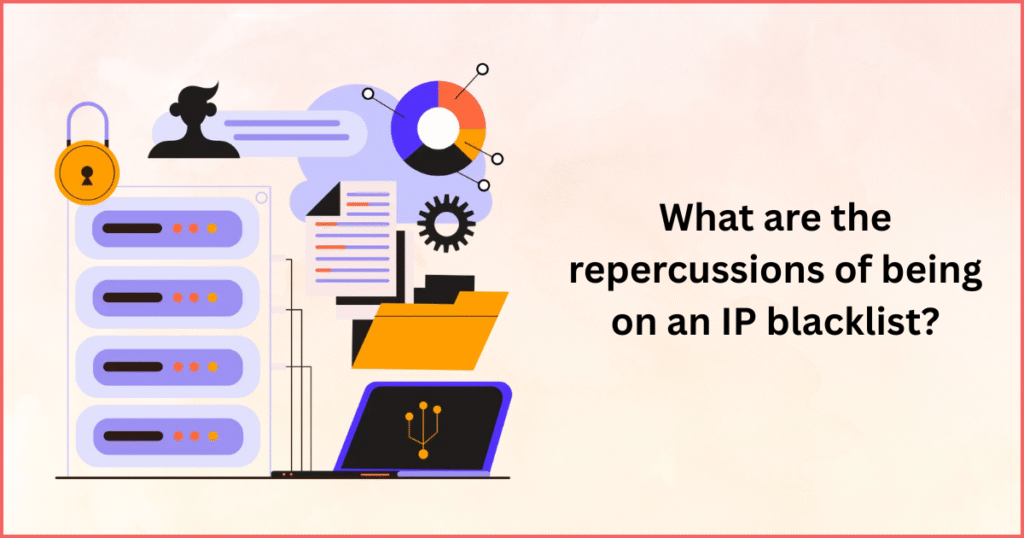
What are the repercussions of being on an IP blacklist?
A solution for the blacklisted IP There comes a time when for an unexplained cause the traffic to their pages or the deliverability of emails starts falling but cannot be associated to anything with online business owners and email marketers. This could be as a result of several things including search engine indexing problems among others. But sometimes marketers may wonder, is my IP blacklisted? One way in which cybercriminals are stopped from abusing client-private systems via bogus or unsolicited messages is through IP blacklisting. Systems are created by organizations to watch out for communication between company secured networks and all other outside IP addresses. Gmail and Microsoft are examples of email service providers who may have access to these blacklists, enabling them to mark emails associated with these IPs as junk or spam automatically in their subscribers’ inboxes. In general, owners of blacklisted IPs observe a considerable decrease in email penetration rates, which has an adverse impact on the reputation of the source and efforts to market it. Despite the fact that IP blacklisting is largely advantageous for security purposes in online businesses, customers and vulnerable data; there are occasions when an IP address happens to be misplaced in terms of being tagged as malicious. To assist marketers comprehend this intricate matter better, here is a comprehensive manual that shows how to recognize, manage and avert unintentional blacklisting your IP address. Steps You Must Take to Prevent IP Blacklisting When one is an IP address holder, they are able to use different ways to know if their IP has been blacklisted by some organizations. While a lot of people think all email service providers get their IP blacklist information from one centre or centre agent, there are many different kinds of IP blacklists used today. Some lists hurt holders of these special codes more than others. The most reputable IP black lists damaging email delivery include: Email marketers may ask themselves, “Is my IP blacklisted?” The easiest way to do this is by finding the IP address of your email server and inputting that one or more of the aforementioned IP blacklist sites. From the search results, you will determine if these services have flagged your IP as suspicious or not. Your IP has been blacklisted by a reliable source; possible ramifications include: Getting Emails Not Delivered No matter how pressing your email message may seem at the time, don’t waste your breath; if it came from an IP that was once blacklisted by some bloody provider, it will not find its way in someone’s inbox, but rather in the trash bin. When an IP address holder sends an email through a blacklisted server, he/she would receive immediately after tellingly referred to messages called bounce messages after which such a person decides to compare the names with those on Google blacklists service list and URL Links. High of emails flagged as spam servers Most likely, any messages from such an address would land directly on the junk folder because major email providers like Google and Microsoft see blacklisted IPs as potential sources of spam. So if you have clients who happen not to receive your emails from them there is no way beyond saying anything about it furthermore there is no other specific message except for those saying this mail has been filtered out due daringly visible mails through people’s insights. Significant reputational damage Companies associated with blacklisted IPs can suffer significant reputational damage, as all emails sent from official accounts will be at risk of being marked as suspicious. If customers associate your brand with spam, your company’s credibility and reputation will be adversely affected, with 70% of email users believing spam negatively impacts their online experience. Wider business communication issues Emails sent from blacklisted IP addresses are not only less likely to reach potential clients, but may also be sent to junk mail inboxes associated with existing customers and internal employees. At present, it’s believed around 61% of internet users deploy some form of spam filter intended to automatically block suspicious emails, potentially hindering wider business communications for any entities that find their IP address wrongfully linked to an IP blacklist. Reputational Loss Reputation has a high price tag for companies linked to blacklisted IPs; emails sent and received from official accounts are always being eyed with suspicion. Your business will be tarnished if customers relate it to spam because human ignorance, says that unsolicited messages make 70 % of email users feel like they are being cheated online. Broader Business Communication Problems It is hard for emails coming out of blacklisted IP addresses to reach potential customers; sometimes they do not even get beyond existing clients’ junk mailbox and internal workers’ spam folders. At the moment, around 61% of internet users are thought to use some sort of anti-spam filter which is intended to automatically reject spam-like messages otherwise known as junk or unwanted e-mails thereby limiting any chance to broaden business interactions if an entity inadvertently finds itself listed together with other entities categorized as such by themselves due to error in listing their own site’s unique identifiers. It has been noted that, although various IP blacklisting services have their own criteria for identifying suspicious accounts (most are not revealed), some of the reasons are widely accepted by digital communication specialists. For marketers who often wonder whether their IP’s are blacklisted or not, it is advisable to establish if any of these instances apply to one’s internet protocol address. Promotion through excessive email Email marketers who continually send large quantities of identical messages to many different non-related accounts could be perceived as fraudsters and hence be flagged by internet service providers. The chances of your IP address being blacklisted will increase if spammers pay attention, such behaviour or if many recipients report you to their own email servers as a junk mail sender. Instances used as examples on how spam-like looks like according to IP blacklisting services include: Emails directed to non-existent accounts Organizations