
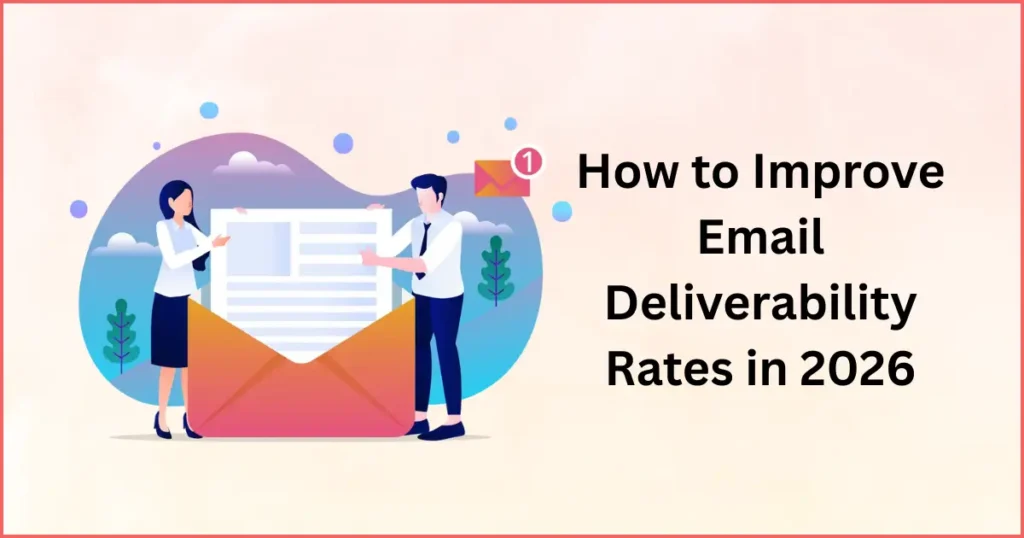
How to Improve Email Deliverability Rates in 2026
Email marketing continues to be one of the highest-ROI digital channels, but only if your emails actually reach the inbox. As spam filters grow smarter and privacy regulations tighten, businesses must adapt to new standards. Understanding how email systems work and following the right strategies is essential to stay ahead in 2026. What is Email Deliverability? One of the sides of deliverability is the ease of landing an email in a person’s inbox as opposed to being trapped within the spam or promotions folder. On sending emails, there is the concept of deliverability, which is not just about how the emails should be sent so that their acceptance, hand-overs, and linking-to-delivery have been done by receivers. Deliverability is improved by sender reputation, email content, authentication strategies, engagement practices, and sending behavior. Understanding Email Deliverability in 2026 Understanding email deliverability is important as it is. The best provider of inbox types prioritizes user experience in Gmail, Outlook, and Yahoo by viewing how the recipients interact with emails, rather than checking for technical settings. In the long run of 2026, the placement of email inboxes will largely lean on: Sending an email successfully is no longer enough. You must keep educating inbox intake all along. Why Email Deliverability Matters Poor deliverability means: On the other hand, strong deliverability ensures your email marketing efforts generate consistent and measurable results. This is why brands now treat deliverability as a long-term strategy rather than a one-time setup. Best Practices for Email Deliverability in 2026 Following the right strategies is the foundation of successful campaigns. Below are the most effective best practices for email deliverability that marketers should focus on this year. 1. Authenticate Your Email Domain Properly Email authentication builds trust with inbox providers. Make sure your domain has: These records prove that your emails are legitimate and not spoofed, significantly reducing spam placement. 2. Maintain a Strong Sender Reputation Your sender reputation is like a credit score for email. It is built over time based on: To Improve email deliverability, avoid sudden spikes in volume and always warm up new domains or IP addresses gradually. 3. Focus on Permission-Based Lists Buying or scraping email lists is one of the fastest ways to destroy deliverability. Always send emails to users who have explicitly opted in. Clean your lists regularly to remove: Healthy lists improve engagement and protect your domain reputation. 4. Create High-Quality, Relevant Content Content plays a major role in inbox placement. Spam filters analyze language patterns, formatting, and user engagement. Avoid: Strong content is one of the most overlooked best practices to improve your email deliverability, yet it has a direct impact on opens and clicks. 5. Optimize Engagement Metrics Inbox providers track how recipients interact with your emails. Positive signals include: Negative signals include: Encourage engagement by sending relevant content at the right frequency and personalizing messages whenever possible. 6. Segment Your Email Lists Sending the same email to everyone reduces relevance. Segmentation allows you to tailor messages based on: Better targeting improves engagement, which directly supports email delivery best practices in 2026. 7. Monitor Bounce and Complaint Rates High bounce rates and spam complaints are warning signs. Internet service providers expect: Use analytics tools to track these metrics and take corrective action quickly to protect your sender reputation. 8. Send Consistently, Not Aggressively Irregular sending patterns confuse spam filters. Sending too many emails at once or disappearing for weeks can harm deliverability. Maintain a consistent schedule so inbox providers can predict your behavior. Consistency is one of the most reliable email marketing best practices for long-term success. 9. Optimize Emails for Mobile and Accessibility In 2026, most emails are opened on mobile devices. Emails that don’t display correctly are quickly deleted, hurting engagement signals. Ensure: Better user experience leads to better deliverability. 10. Test Before You Send Always test emails before launching campaigns. Check: Regular testing helps identify issues early and is a critical step in how to improve email deliverability consistently. The Role of Compliance and Privacy Privacy laws like GDPR, CAN-SPAM, and evolving regional regulations continue to influence deliverability. Always include: Compliance builds trust with both users and inbox providers. Deliverability Is a Long-Term Strategy Email deliverability is not a one-time setup or quick fix. It is an ongoing process that requires monitoring, testing, and optimization. Brands that treat deliverability as part of their overall email strategy consistently outperform competitors who ignore it. Conclusion In 2026, inbox providers prioritize trust, relevance, and user experience above all else. By following proven email deliverability best practices, maintaining clean lists, creating valuable content, and monitoring engagement, businesses can ensure their emails reach the inbox consistently. If you want sustainable email success, focus on building relationships, not just sending messages. Deliverability is the foundation that makes every email campaign possible.